Beyond Superstition: How Asian Number Traditions Are Actually Changing the Way DU88Z Players Bet
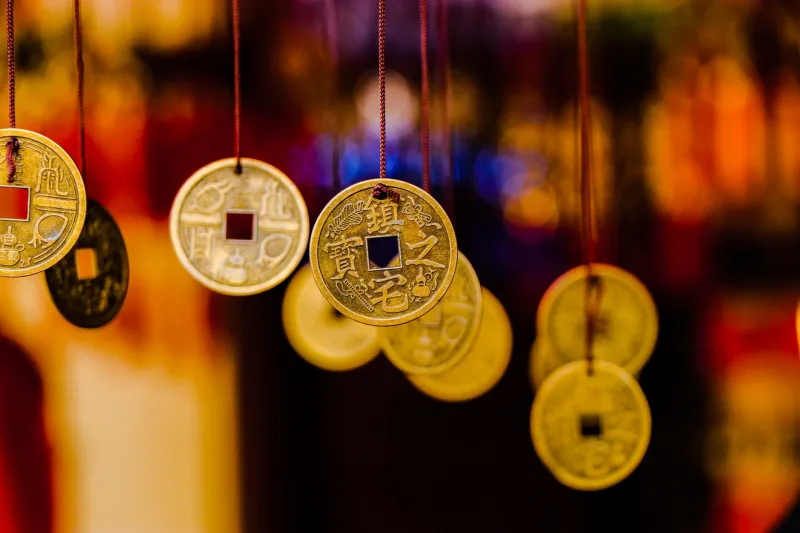
Ask a random American bettor how they pick their numbers and you'll probably hear something like, "I don't know — gut feeling, I guess." Ask a seasoned DU88Z player who grew up in a household shaped by Chinese, Vietnamese, or Korean tradition, and the answer gets a whole lot more interesting.
They might mention their birth chart. Or the feng shui alignment of their birth year. Maybe they'll reference their zodiac animal, or a combination of digits their grandmother swore by for decades. To an outside observer, this might sound like folklore dressed up in gaming clothes. But dig a little deeper — talk to the mathematicians, the cultural historians, the behavioral psychologists — and a more nuanced picture starts to emerge.
Number selection in Asian tradition isn't random mysticism. It's a structured system of meaning that has shaped decision-making across millions of households for centuries. And at DU88Z, where the player base skews toward communities with deep roots in Asian culture, these frameworks are quietly influencing how people approach everything from slot machine betting patterns to live dealer wager sizing.
What Ba Zi Actually Is (And Why It Matters at the Casino)
Ba zi — sometimes called the Four Pillars of Destiny — is a Chinese metaphysical system that maps a person's fate across four key components: birth year, month, day, and hour. Each pillar corresponds to a heavenly stem and earthly branch, producing a unique numerical and elemental profile.
For players, this often translates into a personal set of "favorable" numbers tied to their elemental makeup. Someone with a strong wood element in their chart might gravitate toward numbers associated with growth and expansion — threes, fours, eights. A player with dominant metal energy might feel drawn to sixes and sevens, numbers historically linked to precision and structure in Chinese cosmology.
"The ba zi system isn't really about luck in the Western sense," explains Dr. Mei-Ling Huang, a cultural anthropologist based in San Francisco who has studied the intersection of traditional Chinese belief systems and modern consumer behavior. "It's about alignment. The idea is that when your choices resonate with your personal energetic profile, you're operating in a state of greater coherence. Whether or not that affects the dice, it absolutely affects your mental state — and that matters enormously in high-stakes decision-making."
That last part is worth sitting with. Your mental state at the table is not a trivial variable.
The Feng Shui of Numbers: More Than Just Lucky 8
Most Americans have heard that the number 8 is considered lucky in Chinese culture — it's phonetically similar to the word for prosperity in Cantonese. But the full feng shui numerological framework goes considerably deeper than that single data point.
Four, for example, is widely avoided in East Asian cultures because it sounds like the word for death in Mandarin, Cantonese, Japanese, and Korean. The number 9 is prized in Chinese tradition for its association with longevity and the emperor. Six carries connotations of smooth flow and harmony. Even combinations matter: 168 is considered extraordinarily auspicious because it sounds like "all the way to prosperity" in Cantonese.
DU88Z players who come from these cultural backgrounds often build betting sequences around these associations — not because they believe the universe is literally rewarding their number choices, but because these numbers carry emotional weight. They produce confidence. They reduce hesitation. In a game where decisiveness and consistency are genuine strategic assets, that psychological grounding is not nothing.
"There's a concept in behavioral economics called the 'confidence effect,'" notes James Okafor, a quantitative analyst who consults for gaming platforms and has studied wagering behavior across cultural demographics. "When a player feels anchored to a system — any coherent system — their decision variance drops. They make fewer impulsive deviations from their strategy. In games with a skill component, or even in games where bankroll management is the primary lever, that consistency translates to measurably better outcomes over time."
Zodiac Associations and the Calendar Edge
The Chinese zodiac adds another layer to this picture. Each of the twelve animal signs carries numerical associations, elemental affinities, and even timing cycles that some players use to structure their sessions.
Rat years are associated with quick thinking and adaptability — energies some players interpret as favorable for fast-paced games like speed baccarat or rapid-fire slots. Ox years carry connotations of endurance and steady accumulation, which some players translate into longer, lower-variance sessions with tighter bet sizing. Dragon years — widely considered the most auspicious in the entire twelve-year cycle — often see a measurable uptick in gaming activity across Asian communities globally.
This isn't superstition for superstition's sake. It's a cultural calendar that gives players a framework for timing their play, managing their expectations, and contextualizing both wins and losses within a larger narrative structure. That narrative function is genuinely useful. Players who can contextualize a losing session within a broader system are less likely to tilt, less likely to chase losses, and more likely to return to the table with a clear head.
Where Culture Ends and Math Begins
Here's the honest part, and DU88Z has always been straight with its players: no number system changes the underlying mathematics of a casino game. The RTP on a slot machine is fixed. The house edge in baccarat doesn't care about your ba zi chart. Roulette wheels have no awareness of feng shui.
But that framing misses the actual value proposition of these traditions. Nobody who seriously engages with Asian numerology believes the universe is manually adjusting their outcomes. What they're doing is something more sophisticated: they're using a culturally resonant decision-making framework to bring structure, intention, and emotional stability to an activity that can easily spiral into chaos.
The math is fixed. Your psychology is not. And your psychology — your discipline, your consistency, your ability to walk away at the right moment — is the only real edge any player ever has.
How DU88Z Players Are Actually Using This
Across the DU88Z community, the practical applications are surprisingly varied. Some players use their favorable numbers to set daily loss limits — treating those figures as psychologically meaningful boundaries rather than arbitrary caps. Others build slot session structures around auspicious number combinations, playing a set number of spins tied to lucky digits before reassessing.
In live dealer games, some players size their bets according to numerologically significant amounts — betting in multiples of 8 or 9, for example — which has the secondary effect of enforcing consistent bet sizing rather than emotional escalation.
None of this is magic. All of it is strategy — culturally inflected, personally meaningful, and functionally effective for the players who use it.
At DU88Z, we think that's worth celebrating. The intersection of cultural wisdom and modern gaming isn't a quirk — it's a feature. Your heritage isn't just background noise. It might just be your sharpest tool at the table.
Play smart. Play intentional. And maybe check your ba zi chart before your next session — you might be surprised what you find.