Ancient Reads, Modern Wins: How Asian Card Game Wisdom Is Reshaping Poker at DU88Z
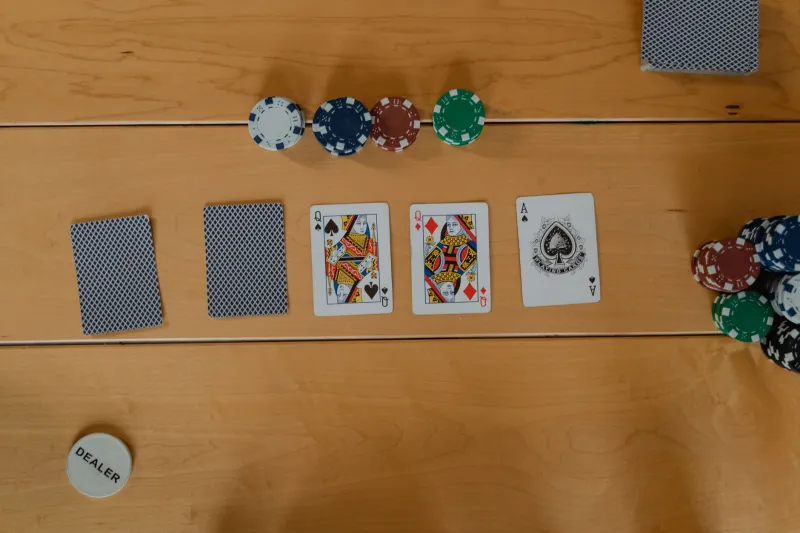
Most American poker players grow up learning the same foundational playbook: pot odds, position, aggression, bluff frequency. It's a solid framework, no doubt. But a growing number of players at DU88Z Casino are quietly pulling from a very different well — one that runs centuries deep through Chinese gambling halls, Japanese card rooms, and Southeast Asian game tables. And it's giving them a serious edge.
This isn't about superstition or lucky charms. This is about strategy, observation, and a philosophy of play that Western poker culture hasn't fully caught up to yet.
The Pai Gow Principle: Think in Two Layers
If you've ever played Pai Gow poker — a staple at DU88Z — you already know the core mechanic: you split your seven cards into two separate hands, a five-card hand and a two-card hand, and both need to beat the dealer's corresponding hands to win. Simple enough on the surface. But what serious players understand is that Pai Gow trains your brain to think in layers simultaneously.
Danny T., a regular DU88Z player from the Los Angeles area who grew up watching his grandparents play traditional Chinese card games, puts it this way: "In Pai Gow, you're always balancing strength across two fronts. You can't just dump everything into one hand and hope for the best. That mindset — distributing your strength, never going all-in on a single read — that's something I brought straight into my Texas Hold'em game."
In practice, Danny applies this by thinking about his chip stack and his table image as two separate hands that both need to be managed. "A lot of American players build one monster stack and then crash out because they got too attached to one strategy. I'm always thinking about how I look to the table and what my cards actually say. You gotta win on both levels."
Reading the Room: Behavioral Cues From a Different Tradition
In traditional Asian card games like Tiến Lên (a Vietnamese climbing card game) or the Korean game Go-Stop, a huge part of the skill isn't in the cards themselves — it's in reading your opponents through micro-expressions, betting rhythm, and even how they hold their hand. These games were often played in small, tight-knit social circles where everyone knew everyone, which meant psychological observation became an art form.
Mei L., a DU88Z player from the Bay Area who learned card games from her family before she ever touched a poker chip, says this background gave her a completely different lens on live tells. "Western poker coaching talks a lot about physical tells — hand tremors, eye contact, that kind of thing. But what I learned from watching older family members play is more about rhythm. How long does someone pause before they bet? When do they go quiet? It's almost musical."
She's applied this to her online poker sessions at DU88Z as well, tracking betting timing patterns in digital play. "Even online, people have rhythms. Someone who usually bets in two seconds suddenly takes eight? That's information. That's a tell. I learned to listen for that kind of thing long before I learned what a three-bet was."
Hand Hierarchy and the Humility of the Middle Path
Another concept that translates surprisingly well from Asian card traditions is what you might call the "middle path" approach to hand hierarchy. In games like Mahjong — which, while tile-based, shares deep strategic DNA with card games across Asia — experienced players often aim for a solid winning hand rather than a spectacular one. Chasing the rare, high-value combinations too aggressively often leaves you exposed.
This runs counter to the glorified "go big or go home" narrative that dominates a lot of American poker culture, where highlight reels are full of massive bluffs and all-in hero calls. At DU88Z, some of the most consistent winners are players who've internalized this quieter philosophy.
James K., a DU88Z regular who grew up playing cards in his Korean-American household in Chicago, describes it as "winning without drama." He explains: "My uncle always said the flashy hand is the dangerous hand. You get so excited about hitting a flush that you ignore the guy across the table who's been slowly, quietly building a full house. Patience and consistency beat theatrics most of the time."
James applies this in tournament play by targeting middle-of-the-pack survival in early rounds rather than trying to dominate early chip counts. "American tournament strategy is often about building a big stack fast. I play to survive first, dominate later. It's a different gear, and it catches people off guard."
Where East Meets West at the DU88Z Tables
What makes DU88Z such an interesting space for this kind of cultural crossover is that the platform naturally bridges both worlds. With games like Pai Gow poker sitting right alongside Texas Hold'em and live dealer baccarat, players are constantly moving between strategic frameworks. That fluidity is exactly where these hybrid approaches thrive.
The players who seem to get the most out of DU88Z's poker offerings are the ones willing to borrow from both traditions — the mathematical precision of Western poker theory combined with the observational depth and emotional restraint of Asian card game philosophy.
It's not about rejecting one approach for the other. It's about recognizing that a centuries-old card culture developed serious strategic wisdom for good reason, and that wisdom doesn't stop being useful just because the game changed.
Try It at Your Next Session
Next time you sit down at a DU88Z poker table, try running a small experiment. Before the cards are dealt, spend the first few hands just watching. Track betting rhythms. Notice who goes quiet and when. Think about how your table image and your actual hand strength are two separate things you're managing at once.
You might find that the oldest strategies at the table are the ones nobody else saw coming.