Wired to Win: How Asian-Inspired Game Design at DU88Z Rewires the Way You Think About Risk
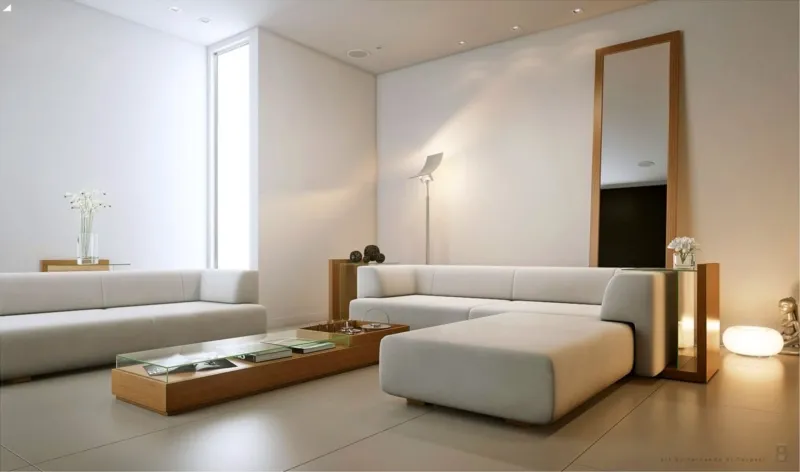
Photo: minimalist Asian casino interface clean design zen aesthetic, via mmminimal.com
Walk into any Vegas casino and you already know the drill. Flashing lights everywhere. Sounds layered on sounds. Carpets so loud they practically scream. The whole environment is engineered — deliberately, by very smart people — to knock your decision-making offline and keep you in a reactive state. That's not an accident. It's architecture.
DU88Z is built on a different philosophy entirely. And if you spend enough time here, you'll notice something: you actually start thinking differently about your bets.
The Vegas Playbook (And Why It Works Against You)
Traditional Western casino design borrows heavily from what psychologists call "environmental loading" — the idea that sensory overload pushes people toward fast, instinct-driven choices rather than deliberate ones. Slot machines chime constantly. Dealers move at a pace that doesn't invite reflection. Chips feel lighter than money. Every single design choice is calibrated to reduce friction between impulse and action.
For the house, that's ideal. For you, it's a problem.
Research in behavioral economics has shown repeatedly that when people are cognitively overwhelmed, they default to heuristics — mental shortcuts that feel confident but often aren't. In a high-stimulation casino environment, those shortcuts get hijacked. You chase losses. You over-bet after a win. You stay at a table twenty minutes longer than you planned because the atmosphere made it feel like momentum.
This isn't a character flaw. It's how human brains respond to engineered chaos.
What Minimalist Asian Interface Design Actually Does to Your Brain
Eastern aesthetic traditions — particularly those rooted in Japanese, Chinese, and Korean design philosophy — have long prized what the Japanese call ma: the meaningful use of empty space. It's the idea that what you leave out is just as important as what you put in. Restraint isn't absence. It's clarity.
DU88Z's platform reflects this sensibility. Clean layouts. Intentional color use. Navigation that doesn't fight for your attention. When your visual field isn't being bombarded, something interesting happens neurologically: your prefrontal cortex — the part of your brain responsible for planning, evaluation, and impulse control — gets to stay in the driver's seat.
That matters enormously when you're making betting decisions.
A player who can clearly see their balance, their bet history, and their current position without wading through visual noise is a player who makes decisions based on actual information rather than emotional momentum. It sounds simple. But it's a genuine competitive advantage.
Decision Frameworks Embedded in Eastern Gaming Culture
Beyond visual design, there's a deeper layer to what makes Asian gaming traditions different: the decision frameworks baked into the games themselves.
Take Go, the ancient Chinese strategy game. At its core, Go teaches players to evaluate the whole board before committing to a move. You're not reacting to your opponent's last play in isolation — you're reading patterns, projecting multiple moves ahead, and understanding that a position that looks weak now might be strategically powerful three turns later.
Or consider the structured betting logic embedded in traditional Mahjong, where knowing when not to draw a tile is as important as knowing when to act. Restraint is a skill, not a default.
These frameworks translate directly to how experienced DU88Z players approach their sessions. Instead of reacting bet-by-bet, they zoom out. They evaluate their session as a whole. They ask: where am I in this game, not just where am I in this hand?
Practical Ways to Activate This Mindset at DU88Z
You don't need a philosophy degree to start benefiting from these principles. Here are a few concrete habits that DU88Z players use to engage the platform's design advantages:
Set your session parameters before you log in. Decide on your ceiling and your floor — the most you're willing to bet and the minimum win that would make you call it a good session — before the games start. This mirrors the pre-game planning central to Eastern strategy traditions.
Use the interface's clarity as a check-in tool. Every few rounds, glance at your balance and your bet history with fresh eyes. DU88Z's clean layout makes this easy. That two-second reset is the equivalent of stepping back from a Go board to read the full position.
Slow down transitions between games. Vegas designs make it effortless to jump from one machine to the next without pausing. At DU88Z, use that same ease to do the opposite — take a breath between sessions and consciously evaluate whether you're moving because of strategy or because of emotion.
The Edge Is Already Built In
Here's the honest bottom line: DU88Z's design isn't just aesthetic. It's functional. The platform's roots in Asian design philosophy create an environment where thoughtful, disciplined players have a genuine structural advantage over their own worst impulses — which is ultimately the only opponent that matters.
Vegas was built to win. DU88Z was built to play smarter. That's a difference worth understanding before your next session.